
Team > M. Sc. Julie-Isabelle Hammer
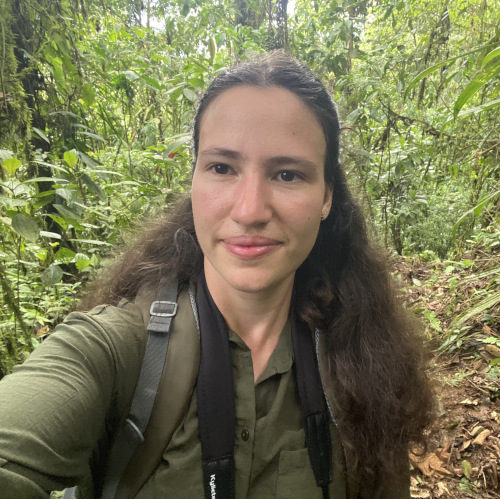 M. Sc. Julie-Isabelle Hammer
Faculty of Biology, Chemistry & Earth Sciences
Population Ecology
Doctoral student
Research project: subproject in the DFG Research Unit 5207 ‘Reassembly of species interaction networks’: Biotic defenses - Multitrophic effects of ant-plant mutualisms in forest recovery
Tropical rainforests are considered as hotspots of biodiversity. Due to anthropogenic influences large areas of these ecosystems have been destroyed in the past and they are endangered worldwide today. The regeneration of disturbed forests and the formation of secondary forests are important processes that counteract the biodiversity crisis and the loss of valuable ecosystems. Not only the return of the individual species, but also their interactions within a community are crucial for the functionality of an ecosystem. In the spotlight of recent research are therefore not only the impacts of degradation or fragmentation of ecosystems on species interaction networks, but as well their development and recovery within regenerating areas.
The DFG Research Unit 5207 “Reassembly of species interaction networks” investigates the regeneration of a tropical lowland rainforest in northern Ecuador in the Ecuadorian Chocó. In the project species interaction networks, ecosystem processes and functional traits are studied along a regeneration gradient. In focus of the second phase lie the influences of microclimatic and biotic effects as well as specific trees on ecosystem recovery.
In my subproject I study the different aspects of the relationship of ants and trees and how they are linked to the regeneration of a lowland rainforest. Ants and trees are known as mutualistic partners. Thereby specific tree species provide food (for example in form of extrafloral nectaries) or shelter to ants who in return defend the tree against herbivores. Ants hereby act as key species of an ecosystem and mediate between different trophic levels. Some of these species are specialists who depend on the mutualistic partner, while others are opportunists. The composition of communities is therefore crucial for a functioning partnership. How such mutualistic interactions develop during reforestation and what influence this has on the regeneration of the ecosystem is barely understood to date. My research focusses on the biotic and abiotic factors driving the community composition of ants along a regeneration gradient as well as ant behaviour in interaction with trees, herbivores and epiphylls.
|
|

Faculty of Biology, Chemistry & Earth Sciences
Population Ecology
M. Sc. Julie-Isabelle Hammer
Doctoral student
Animal Ecology I - Population Ecology
Building NW I, Room 5.0 01 07
University of Bayreuth
Universitätsstr. 30
95447 Bayreuth
Phone: +49 (0) 921 55 2647
Fax: +49 (0) 921 55 2784